Reading style
How to Catch a Mouse: Best Strategies & Tools
Learn how to catch a mouse fast with proven traps, bait tips, and placement strategies—plus humane bucket methods, rat vs. mouse identification, and what to avoid for effective home pest control.


You discover a dropping in the pantry. You hear a scratch in the wall.
Your first instinct is to buy a device and throw it down immediately.
Stop.
Learning how to catch mice is not about luck. It is about strategy.
Many homeowners face mouse problems. They buy equipment. They set traps.
But often, the setup fails. The mouse steals the bait. The pest escapes.
The most important rule of pest warfare is simple: Know Your Enemy.
A strategy that works for a mouse will fail against a rat. A tool designed for a rat might miss a mouse entirely.
This guide helps you identify the intruder. It helps you avoid common scams.
Follow these steps to choose the best mouse trap strategy for your home.
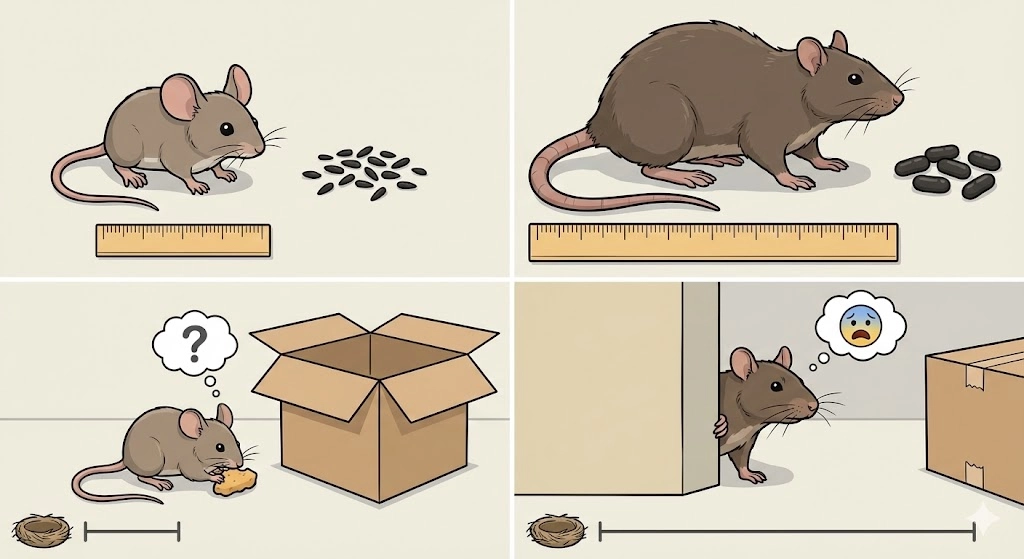
Step 1: Identification (Who is the Intruder?)
Before you buy anything, look at the evidence.
To manage mice in your home, you must confirm the species.
Use this table to determine if you have a House Mouse or a Rat. [1][2]
| Feature | House Mouse (Mus musculus) | Rat (Norway Rat / Roof Rat) |
|---|---|---|
| Size | Small (2-4 inches body). Tiny feet. | Large (7-10 inches body). Heavy/thick. |
| Droppings | Size of a grain of rice. Pointed ends. Scattered everywhere. | Size of a capsule or olive pit. Blunt ends. Found in piles/latrines. |
| Behavior | Curious. They investigate new things. They nip and nibble. | Suspicious. They fear new things (Neophobia). They gorge on food. |
| Range | They stay close to the nest (10-30 ft). | They travel far for food (100-300 ft). |
| The Golden Rule: |
If you see small droppings, use a standard set mouse trap.
If you see large droppings, use a heavy-duty rat trap.
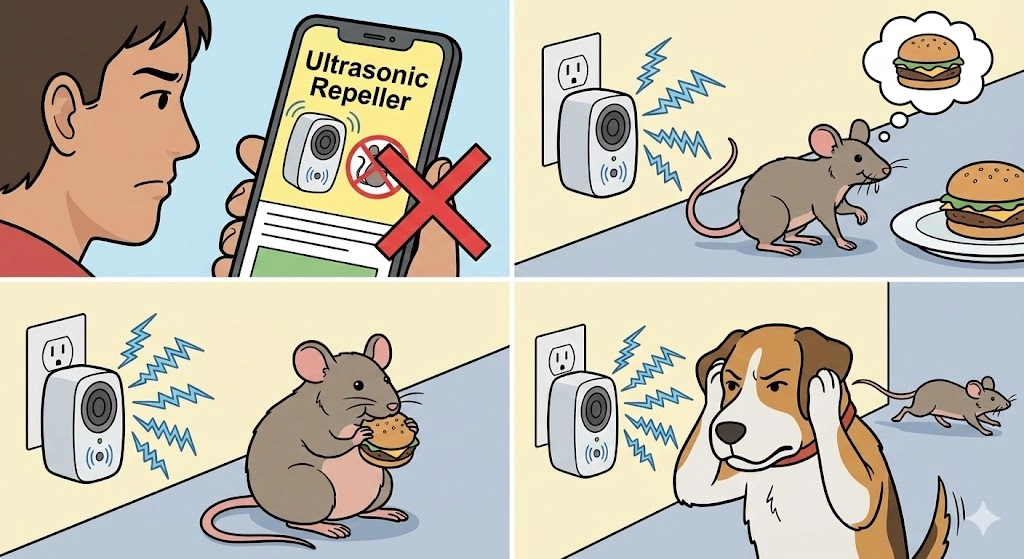
Step 2: The "Repeller" Myth
Before you start, avoid one specific product.
Ultrasonic Repellers. [3][4]
You see ads for them. They claim plug-in devices emit sounds that drive rodents away.
They are ineffective. [3][4]
The "Starvation" Logic:
Imagine you are starving. There is a delicious burger in a room with loud, annoying music. Would you starve? Or would you endure the noise to eat?
Survival instincts drive them. If your house has food and warmth, they ignore the noise.
Verdict: Do not try to annoy them out. You must catch them.
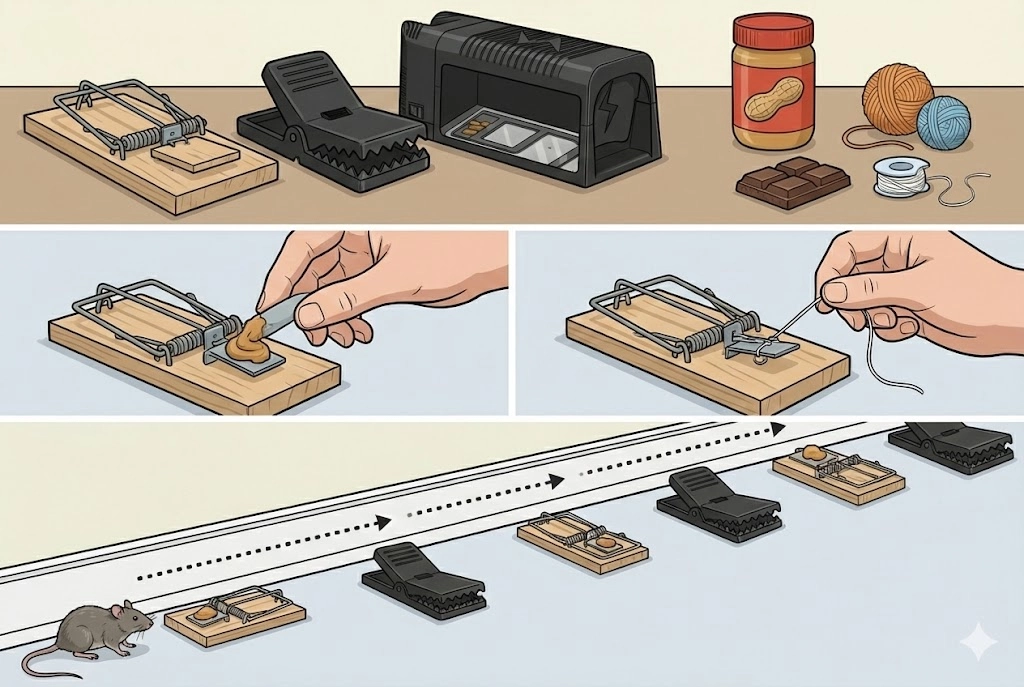
Scenario A: How to Catch a Mouse (The "Minefield")
Mice are curious explorers. They aren't very smart. But they breed fast.
If you see one, you likely have ten.
1. The Weapon
Use standard snap traps.
-
Wooden Models: Cheap and effective.
-
Plastic Devices: The Tomcat press n set is our top pick. It is easy to set and safer for fingers.
-
Electronic Solutions: Good for a quick kill without the mess.
2. The Bait
Use high-calorie food. Peanut butter, chocolate, or hazelnut spread work best.
Nesting: If food fails, tie dental floss or yarn to the trigger. Females need this for nests.
3. The Strategy: "Overwhelming Force"
Mice navigate by running along walls. They use their whiskers to guide them.
Do not just set one device. Set 6 to 12 units. [5]
Place them facing the wall. Create a "T" shape. Space them every 2 to 3 feet. [5]
No pre-baiting needed: Mice are curious. Deploy the solution immediately. They will investigate it because it is new.
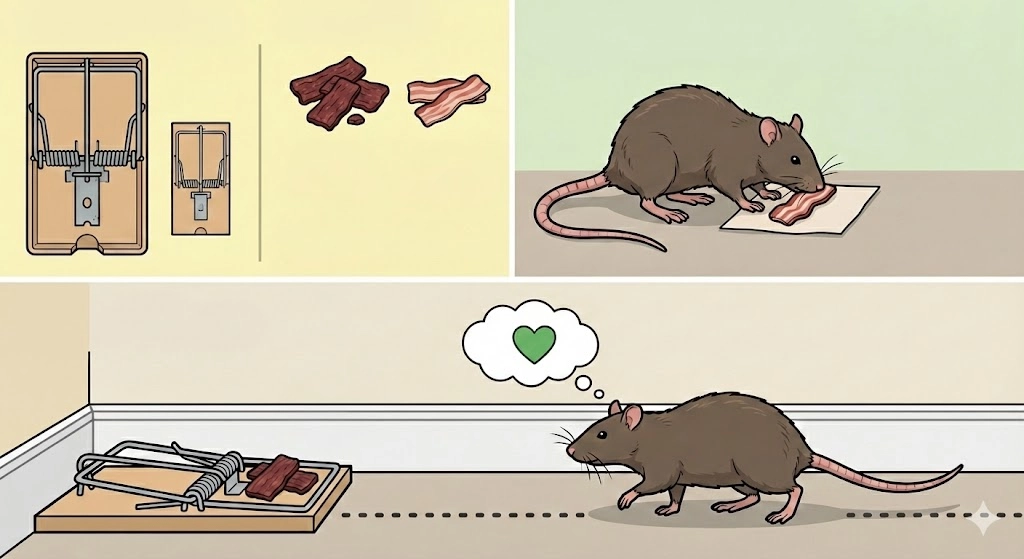
Scenario B: How to Catch a Rat (The "Long Con")
Rats are different.
They are intelligent. They are cautious. They distrust new objects.
If you just throw a tool down, they avoid it for weeks.
1. The Weapon
You need a specialized Rat Snap Trap.
These are much larger and stronger than mouse versions.
Warning: These are dangerous to fingers and pets. Be careful.
2. The Bait
Rats are suspicious. Stick to what they are already eating in your house.
Use high protein sources. Try beef jerky, bacon grease, or dried pet food.
3. The Strategy: "The Trust Game"
Phase 1 (The Free Meal):
Place the device along their path. DO NOT SET IT.
Put bait on the pedal. Let them eat it for 3 days. [5]
Why? You must overcome their fear of new things. They need to learn the object is a fancy dinner plate.
Phase 2 (The Strike):
They are confidently eating the bait every night.
Now, re-bait it. SET the trigger.
They will approach without fear. You get a clean catch.
Scenario C: The Humane & High-Volume Strategy
What if you have too many mice for snap devices? Or what if you want a humane mouse trap?
You need a different approach.
The Bucket Method
Farmers have known how to catch mice with a barrel for decades. It handles high volumes of rodents without needing constant resetting.
If you search for a new way to catch mice, this is often the top recommendation.
How it works:
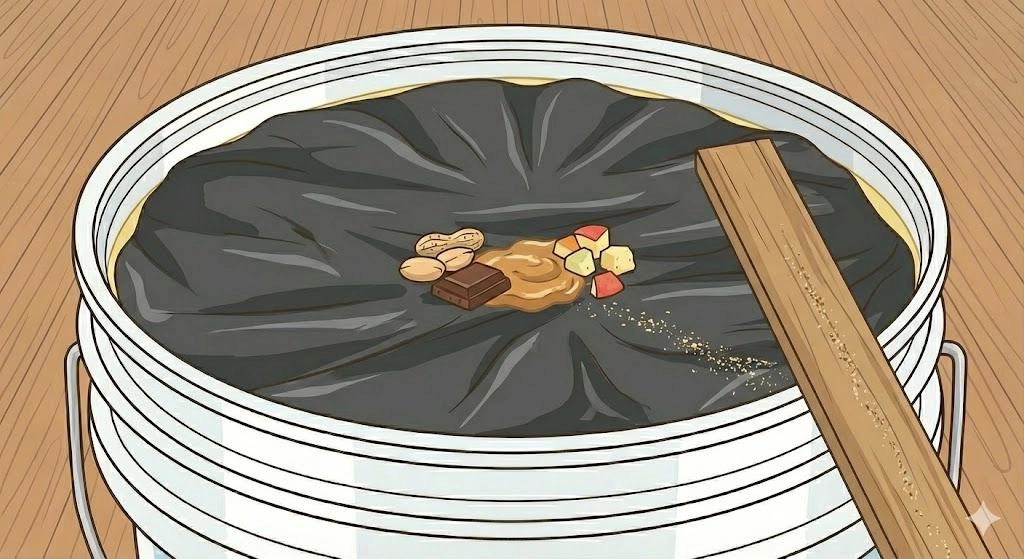
You place a rotating device or a balanced lid on a standard 5-gallon bucket.
The mouse climbs up a ramp to reach the bait.
When they step onto the lid, it spins. The mouse falls into the bucket.
The "False Floor" Upgrade
Basic rollers can fail. Smart mice might balance on them.
For better results, learn how to outsmart mice with a false floor trap.
This involves using a floating layer (like a plastic bag) on top of water or oil. It looks like solid ground. When the mouse steps on it, the floor collapses.
This is arguably the best mouse trap for garages, barns, or basements where infestation levels are high.
It is also the best method for catch and release. Simply leave the bucket dry (no water). Release the mice far away from your home.
[Link: Full Guide to Building a False Floor Setup]
Step 4: What to Avoid (Glue Boards)
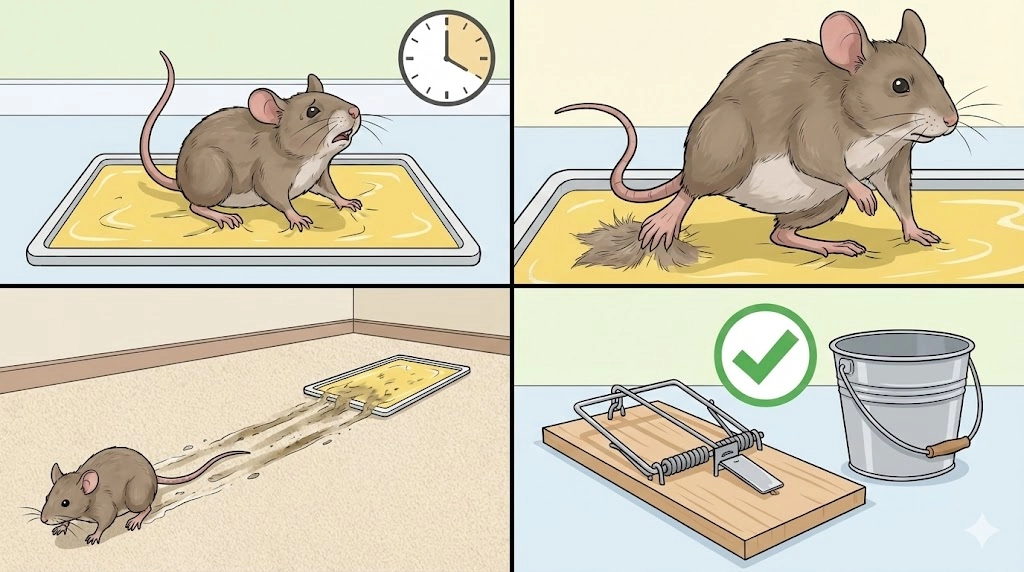
We strongly advise against using glue traps. [5][6]
They are trays of industrial adhesive. While cheap, they cause immense suffering.
-
Cruelty: Mice do not die instantly. They suffocate or starve over days.
-
Failure: Adult mice often pull their legs free.
-
Mess: They can drag the sticky tray across your carpet.
For ethical and effective pest management, stick to snap mechanisms or bucket systems.
Troubleshooting: Why Tools Fail
Even with the right tool, things go wrong.
Here are common reasons why traps don't catch anything.
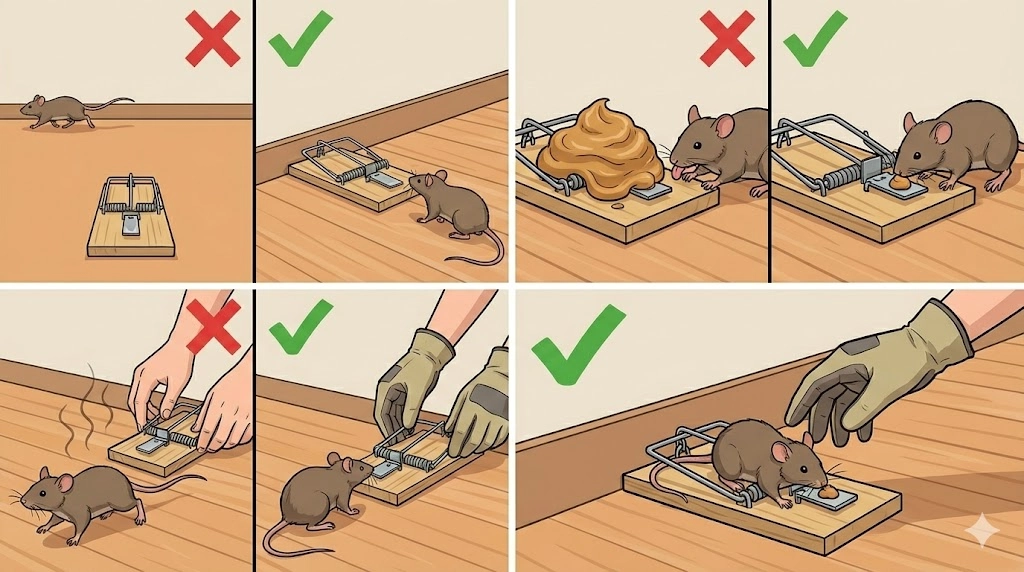
1. Wrong Placement
You placed the device in the middle of the room.
Correction: Move it to the wall. Mice gather along baseboards.
2. Too Much Bait
You put a giant scoop of peanut butter on the trigger.
Correction: The mouse licked it off without snapping the bar. Use a tiny amount (pea-sized). Force them to work for it.
3. Human Scent
You handled the equipment with bare hands.
Correction: Mice smell your skin oil. It warns them away. Always wear gloves when you set traps. [5]
Step 5: Cleanup & Prevention
Once you make the catch, follow these rules.
-
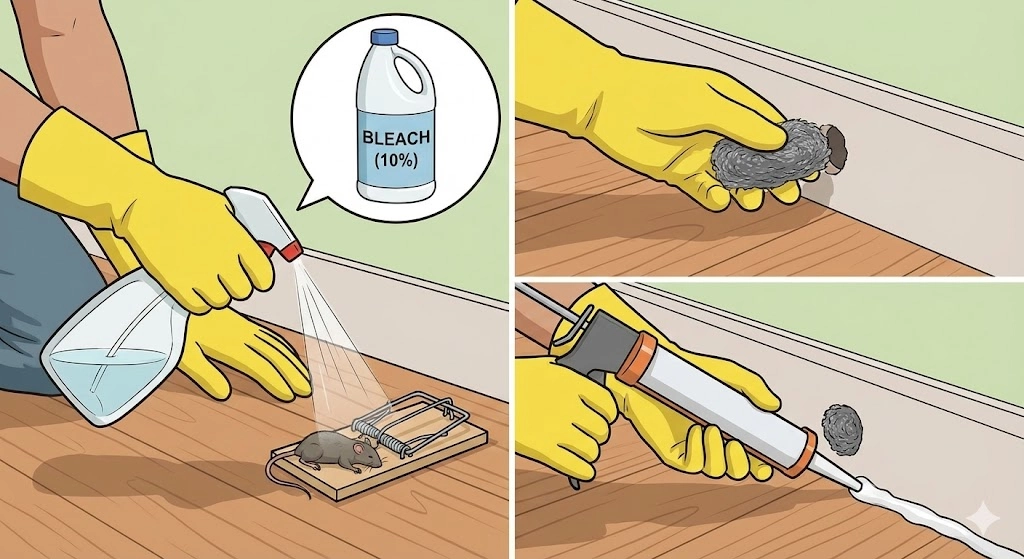
Wear Gloves: Never touch a rodent with bare hands. Dead mice carry diseases. [7]
-
Disinfect: Spray the area with a 10% bleach solution. [7]
-
Seal the Breach: This is the only way to stop them forever.
Mice fit through a hole the size of a dime. Rats fit through a hole the size of a quarter. [8][9]
Stuff holes with Steel Wool. Rodents cannot chew it. Seal the wool in place with caulk or foam. [9]
Conclusion
Successfully removing mice in your home requires the right mindset.
Do not rely on luck. Identify the species first. Choose the right tool. Use the right bait.
Whether you use a classic Tomcat press n set or a DIY bucket solution, patience is your best weapon.
Good pest control is about consistency.
Start your strategy tonight. Reclaim your home.
[Link: See our list of Top Recommended Products]
References
- University of Florida IFAS: Rat and Mouse Control (Behavior, Activity Range, General Guidance)
- Illinois Department of Public Health: Rodents (Mouse vs Rat Behavior & Identification)
- FTC: Warning on Ultrasonic Pest Control Devices
- University of Florida IFAS (Blog): Rat Control on Farms (Ultrasonic Devices / Evidence)
- CDC: Trap Up to Remove Rodents (Trap Placement, Glue Trap Guidance, Pre-Baiting)
- RSPCA Knowledgebase: Glue Boards and Why They Are Inhumane
- CDC: Clean Up After Rodents (Gloves, Disinfection, Bleach Solution)
- MSPCA-Angell: About Rats and Mice (Entry Hole Sizes)
- CDC: Seal Up to Prevent Rodents From Entering
—
Responses (0)
Loading comments...


