Reading style
The Best Mouse Trap Bait: A Chef's Guide
Do not apply peanut butter blindly.


By Enzo Zhang Last Updated: January 25, 2026
Do not apply peanut butter blindly.
Many homeowners assume cheese is the solution.
But mice are picky eaters. They have personalities.
Like humans, they get bored of the same food. They possess dietary preferences. They suspect new things.
To catch a mouse, stop thinking like a pest expert. Think like a Chef.
You are preparing a meal for an "unwelcome guest."
This guide teaches you how to choose the best bait. It goes beyond generic advice. You must find what your specific mouse prefers.
Method 1: Investigating the "Crime Scene"
Inspect damaged food first.
Do not guess. Learn what the mouse is already eating.
To master pest management, inspect your pantry.
Mice suffer from "neophobia." They fear new objects. [1]
Mice in your home seek traps that smell like safe, familiar food.
Found a chewed box of crackers? Use crackers.
Found a gnawed bag of rice? Use raw rice grains.
The Rule: If they eat it already, that is the best bait. Trust their choice.

Observe their dietary "mood."
Mice do not eat high-calorie foods constantly.
They crave variety.
If you set traps with peanut butter without success, change tactics. The mouse might crave moisture.
Check your fruit bowl. Did they nibble on apples?
Sometimes a thirsty mouse prefers fruit over a dry nut.
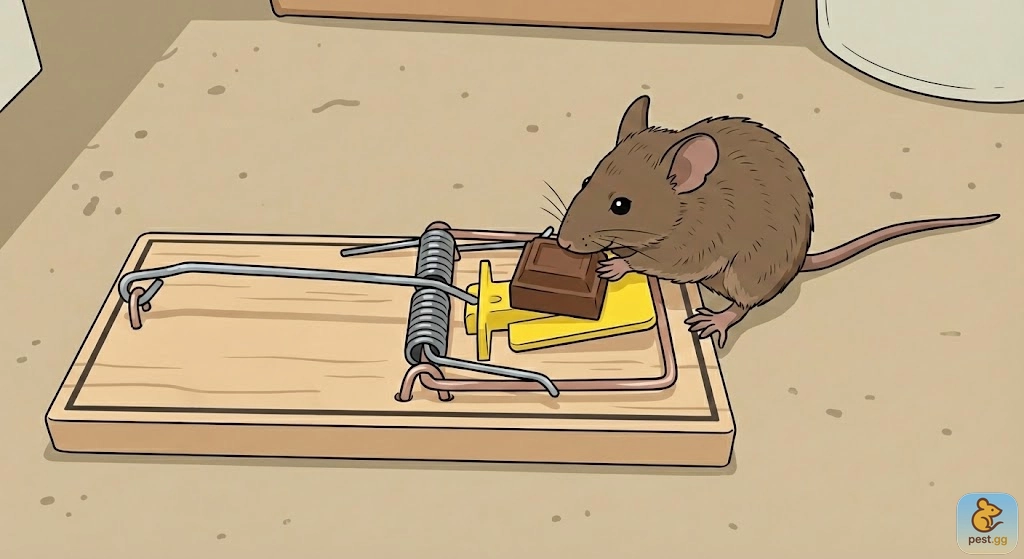
Use the "Pre-Baiting" technique.
Mice are naturally cautious.
Place food on the trap. Do not set the trigger.
Let them eat for two nights. [2]
This builds confidence. Once they trust the food, they lower their guard.
Then, activate the mechanism.
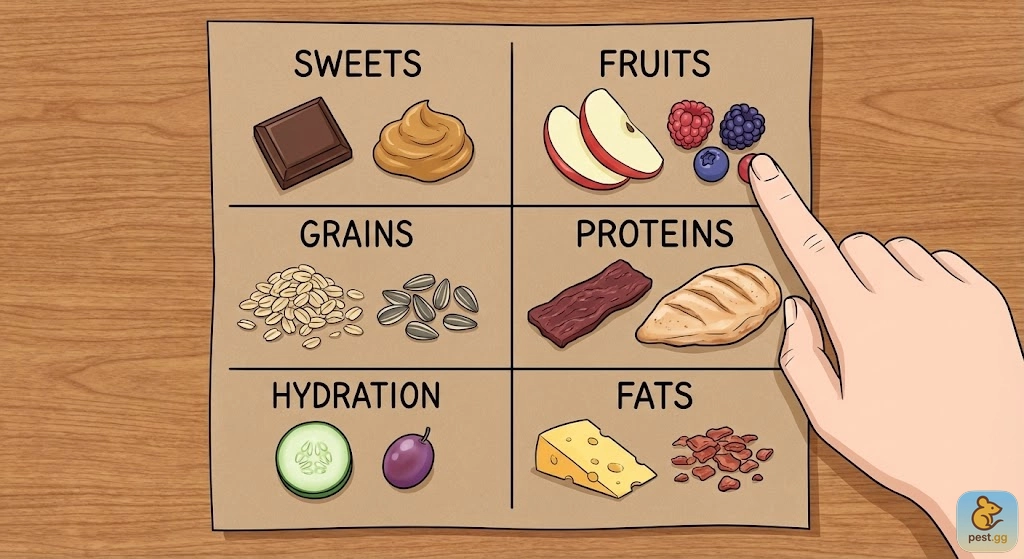
Method 2: Thinking Like a Chef
Create a "Balanced Dish."
Do not rely on one ingredient.
Mice eat a varied diet. They get bored of plain paste.
The best bait combines textures.
The Pairing Technique: Combine a dry item with a fresh item. Tie dental floss around a sunflower seed (crunchy). Attach apple skin (sweet).
Freshness Matters: Do not serve stale meals. Fresh fruits release a sweet aroma. They attract mice effectively.
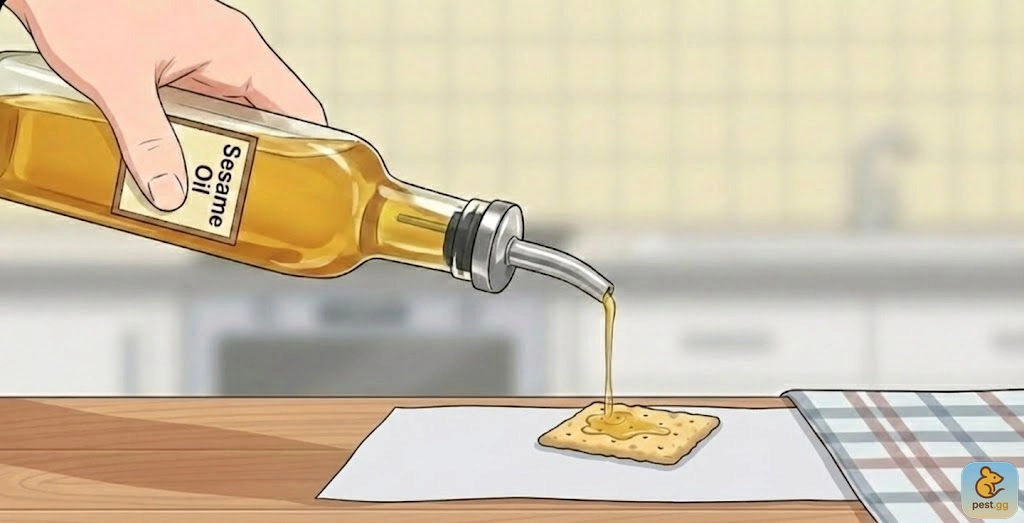
Enhance aroma with "Seasoning" oils.
Scent guides mouse activity.
Make bait hard to resist with a garnish. Add a drop of strong oil.
-
Sesame Oil: A single drop cuts through other smells.
-
Vanilla Extract: Triggers curiosity. This works for mice with a sweet tooth.
-
Bacon Grease: Save grease from cooking. This is excellent rat trap bait. It is more potent than raw meat. [3]
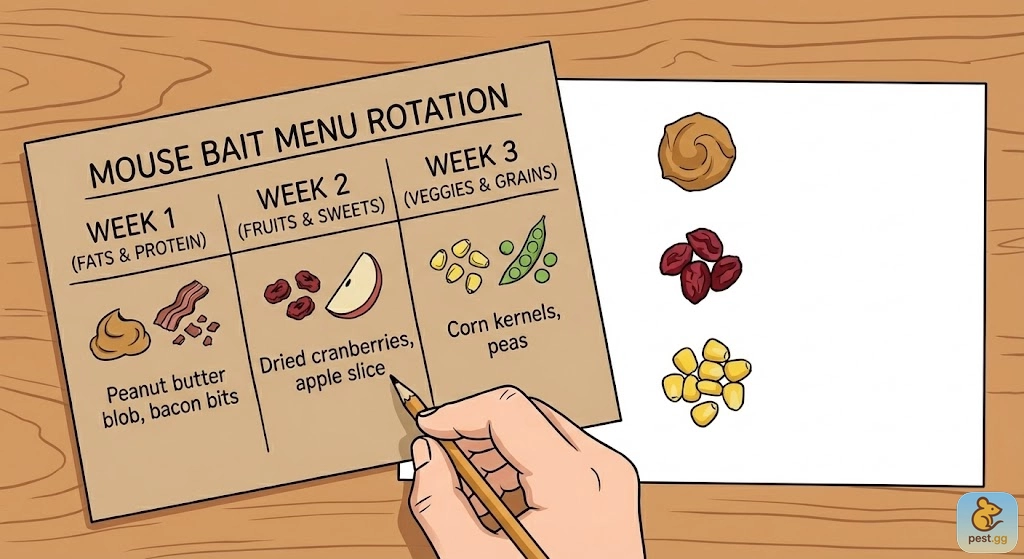
Rotate the menu.
If you catch mice with chocolate, the remaining mice will avoid it.
They associate the smell with dead mice. Or, they require a different flavor.
Change the menu.
Switch from fats to vegetables. Maintain variety to ensure pest control success.
Method 3: Selecting the Right Texture
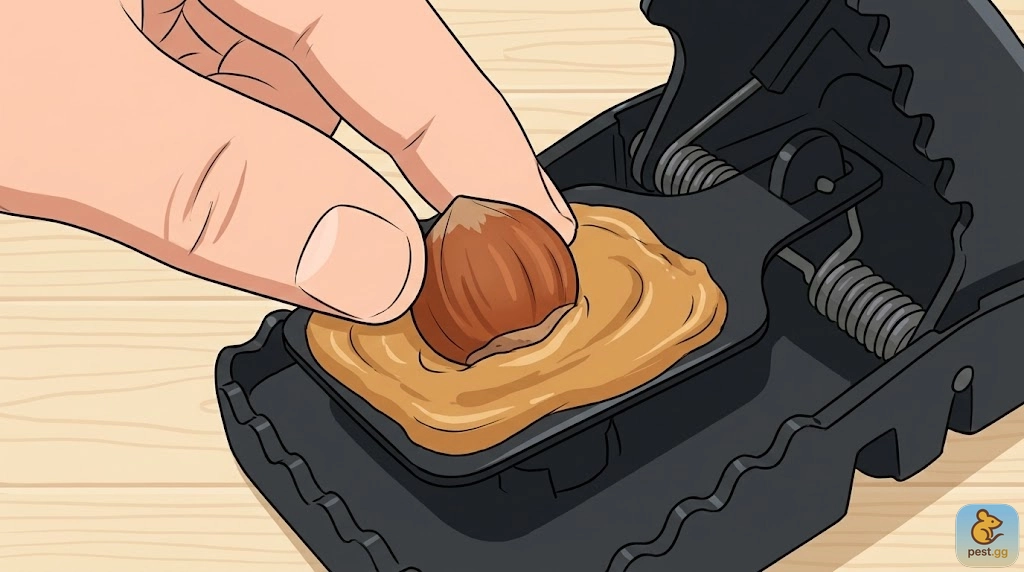
Understand the "Licking Problem."
Peanut butter has a flaw.
Mice lick it off without triggering the mechanism. [4]
They sit on the edge. They lick carefully. They leave safely.
Soft baits work on traps designed for licking. On standard snap traps, this results in stolen bait.
Even the Tomcat press n set can miss if the bait is too soft.
Use solid, "draggable" baits.
Force a reaction.
Mice drag food back to their nest. Exploit this instinct.
A mouse licking paste will not trigger a trap. A mouse yanking on solid food will.
Use bait that requires force to move. Try a whole almond or beef jerky.
Use a "Sticky Base."
Avoid glue traps; they are messy. Avoid superglue; chemical smells repel mice. [2]
Use a culinary approach.
The Technique: Smear sticky paste onto the trigger. This acts as adhesive.
The Placement: Press solid bait (jerky or nut) into the paste.
The Result: The paste holds the treat. To get the meal, the mouse must tug hard. This ensures the trap fires.
Applying Bait to Advanced Traps
The "Chef's Strategy" applies to all methods.
It works for humane mouse trap setups. It is essential if you use catch and release cages.
Even if you are learning how to catch mice with a barrel, the scent is the lure.
The "False Floor" Connection
Are you looking for a new way to catch mice?
Many DIY enthusiasts are learning how to outsmart mice with a false floor trap.
This method uses a bucket and a spinning or collapsing lid. It is easy to set.
However, the trap is only as good as the bait.
When learning how to catch mice, remember that a bucket trap needs a strong aromatic lure. Use the "Seasoning Oils" mentioned above to draw them to the center of the bucket.
Expert Tips for Success
-
Wear Gloves: Mice smell human skin. If the bait smells like a hand, they suspect it. Wear gloves.
-
Nesting Material: Food fails in winter. Mice in your home seek warmth. Tie cotton to the trigger.
-
Patience: If a trap stays empty, do not move it immediately. Give the mouse time to adjust.
-
Placement: Place set mouse trap stations along walls. Mouse problems usually occur along baseboards.
By thinking like a chef, you improve your strategy. The best bait is simply whatever your mouse wants to eat today.
References
—
Responses (0)
Loading comments...


