The Roof Rat

The Roof Rat
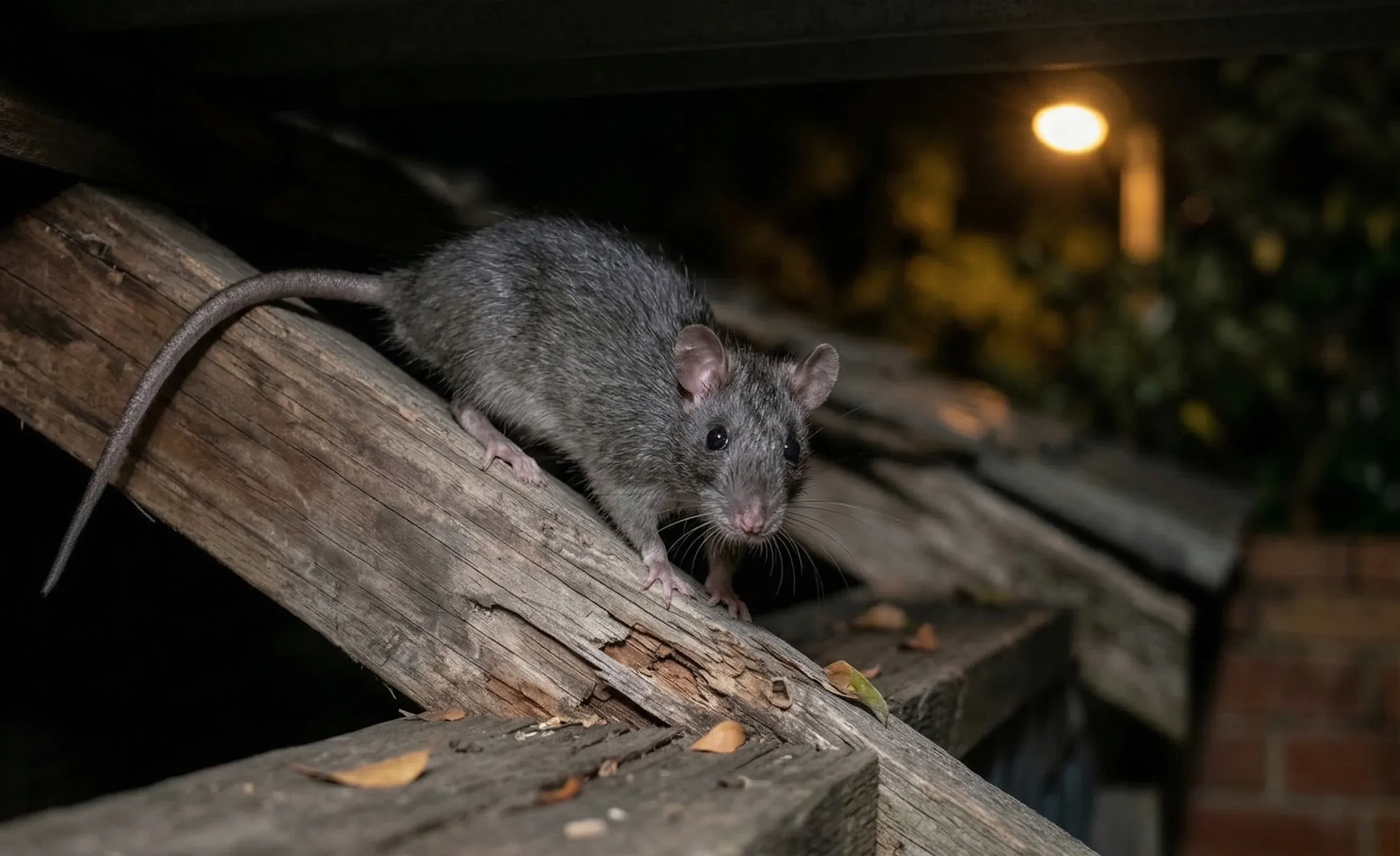
The roof rat is a climbing specialist built for rafters, vines, utility lines, attic runs, and elevated nesting sites. It is leaner than the Norway rat, more agile, and often harder to pin down because it lives above the homeowner’s normal line of sight.
Overview
Roof rats thrive in upper structures: attics, false ceilings, storage lofts, rooflines, and vegetation-linked entry routes. If your sign is concentrated overhead, this species should be high on the suspect list.
Identification
Useful field clues include:
- droppings larger than mouse droppings but slimmer than Norway rat droppings
- high-elevation scratching and movement
- gnawing near attic storage, roof penetrations, and cable runs
- runway use along beams, shelf edges, and pipes
Behavior Profile
Roof rats favor vertical and elevated travel. They are excellent climbers and exploit overhanging branches, fence lines, roof intersections, and utility attachments. Standard floor-only inspection often misses them.
Trapping Strategy
- Place traps in attics, beam runs, upper shelves, and elevated edges.
- Secure hardware so it cannot shift on rafters or narrow surfaces.
- Use baits already associated with stored food, fruit, nuts, or grain-rich areas.
- Check traps frequently because partial misses can make them cautious fast.
Best Inspection Zones
- attic insulation edges
- top plates and rafter lines
- garage lofts
- tree-overhang roof contact points
- cable and vent penetrations near roof level
Exclusion Priorities
Cut off elevated access first:
- trim branches away from the roof
- seal soffits and fascia defects
- protect roof penetrations
- reinforce attic vents and upper utility entries
Conclusion
The roof rat wins by staying above the homeowner’s attention line. To beat it, inspect higher, trap higher, and seal the elevated routes that keep the colony moving.
Responses (0)
Loading comments...